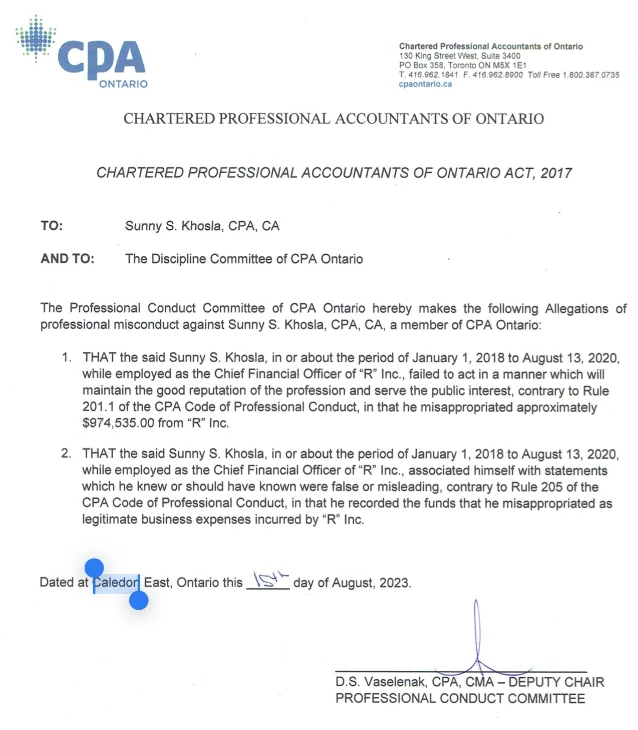
For more detailed information about the case, you can view the CPA Ontario's Professional Conduct Committee.
As a business owner, nothing can prepare you for the moment you realize that you've been the victim of corporate theft. In 2020, during the height of the global pandemic, my company, Ruckify, faced one of its biggest challenges—a theft of over $1 million by an executive. This experience not only shook the foundation of the business but also changed how I approach trust, leadership, and business partnerships.
In this article, I'll take you through how the theft unfolded, the strategies we employed to recover, and the lessons learned from a traumatic experience that many entrepreneurs, unfortunately, face.
The First Signs of Trouble
At the onset, things seemed normal. However, red flags began to surface over time. We were building Ruckify, the world's largest rental marketplace, but we were facing the challenges of starting a new business during an already uncertain time—COVID-19. Like many businesses, we were struggling with cash flow, adapting to new consumer behaviors, and navigating through rapidly changing market conditions.
It started with inconsistent cash forecasts. Our numbers kept missing targets, but we were always provided with a reasonable explanation, and honestly, I didn't think much of it at the time. But deep down, something didn't sit right. One day, while reviewing our U.S. bank account, I discovered a significant transfer of funds that seemed out of place—a transaction that I had not signed off on.
I immediately contacted the responsible executive for clarification. The explanation provided was vague, citing "expenses" that seemed inconsistent with our capital efficiency. I requested the backup documentation, and later that evening, I received a flimsy report that didn't add up. I asked for further clarification and, as I dug deeper, the questions only multiplied.
The Moment of Truth
The situation escalated quickly. As someone who had worked in corporate environments and startups for years, I understood the need for spot checks and having safeguards in place. I'd heard stories of businesses being ripped off by insiders, but I never thought it could happen to us.
Spotting discrepancies like this is crucial in protecting your business. The executive had previously worked as an auditor, which meant they had an intimate knowledge of financial loopholes and how to manipulate the system.
After a tense phone call on a Saturday morning, I directly asked if the executive was misappropriating funds from the company. Initially, they denied the allegations, but after further questioning, they admitted to "borrowing" funds a few times. But, they assured me, it was always paid back.
This admission was a shock, but it didn't end there. When I asked for the complete list of funds they had borrowed, I was initially presented with an $80,000 figure. However, something didn't seem right, so I pressed further. Within an hour, the number grew to $230,000, and after more back-and-forth, the total ballooned to $895,000—close to a million dollars.
The Recovery Process: Confronting the Situation
I told the executive that this was not acceptable and demanded that the funds be returned within 72 hours. Over the next few days, there were several apologetic phone calls and full confessions, but at this point, I was beyond furious.
Surprisingly, the funds were returned in full by the Thursday deadline, but that wasn't the end of the story. We immediately hired a forensic accounting team from a national firm to investigate further. After several weeks, they uncovered additional missing funds.
The emotional toll this took was immense. Our business was already struggling to survive amidst the pandemic, and now we had to deal with the betrayal of someone we trusted.
The experience taught me a hard lesson in leadership and trust—not all people have the same moral compass, and even trusted individuals can cause irreparable damage to a company. As we would soon learn, the story wasn't over yet.
Corporate Crime and the Far-Reaching Impact
Corporate theft is unfortunately more common than many entrepreneurs realize. According to the Association of Certified Fraud Examiners, 5% of annual revenue in typical U.S. organizations is lost to occupational fraud, including employee theft. Furthermore, the median loss from such fraud schemes is $130,000. For startups, such theft can be even more devastating.
Beyond the immediate financial loss, there are psychological impacts. The betrayal caused by someone you trust can damage employee morale, lead to a lack of trust within your team, and create unhealthy working conditions. We were fortunate that we caught the theft early, but many companies don't.
The emotional cost on the founders and team is often overlooked. You question your own judgment, your ability to lead, and wonder if your company can survive such a devastating setback.
Ruckify's Aftermath: A Hard Road Ahead
Even after the stolen funds were returned, the damage was done. The reputation of the company was shaken. The trust we'd built with investors, partners, and customers had been compromised. The financial setback wasn't just a number on a balance sheet; it was a signal that we needed to re-evaluate our operations.
Our bank and law enforcement told us that stolen funds rarely get returned, making this outcome even more surprising. But it wasn't just the money; it was the emotional toll on everyone involved. Still, we managed to survive, and Ruckify continued to grow. However, the ultimate demise of the business was not the theft—it was partnership issues that led to the company's eventual shutdown.
In the aftermath, the Professional Conduct Committee of CPA Ontario revoked the accounting designation of Sunny Khosla, the executive who had stolen the funds. He was fined $40,000 and required to pay $17,000 in costs. His actions had a devastating impact on many individuals, and it's hoped that the consequences will prevent him from doing this again.
What Can Entrepreneurs Learn from This Experience?
Trust, but Verify: Always have safeguards in place. Conduct regular spot checks, especially with financial operations.
Don't Skip on Forensic Accounting: If you suspect theft or fraud, don't hesitate to hire forensic accountants to thoroughly investigate.
Understand the Emotional Cost: Corporate theft has far-reaching effects beyond just financial loss. It impacts team morale, relationships, and the trust that's essential for business success.
Build Strong Internal Systems: Relying on a strong internal control system and having clear, documented processes can help you spot anomalies early and avoid catastrophic losses.
Lead by Example: As a business leader, your own actions and decisions set the tone. Be transparent, trustworthy, and maintain the highest standards of integrity.
The full details of the case can be found at CPA Ontario's Professional Conduct Committee and for more about the impact on Ruckify, you can read about it on my personal website here.
Conclusion
While Ruckify survived the theft, it serves as a reminder that trust is the cornerstone of any business. Without it, your company's survival is uncertain. Being vigilant, safeguarding your assets, and fostering transparency is crucial to long-term success.